The Complete Guide to the Bill of Lading in Exports
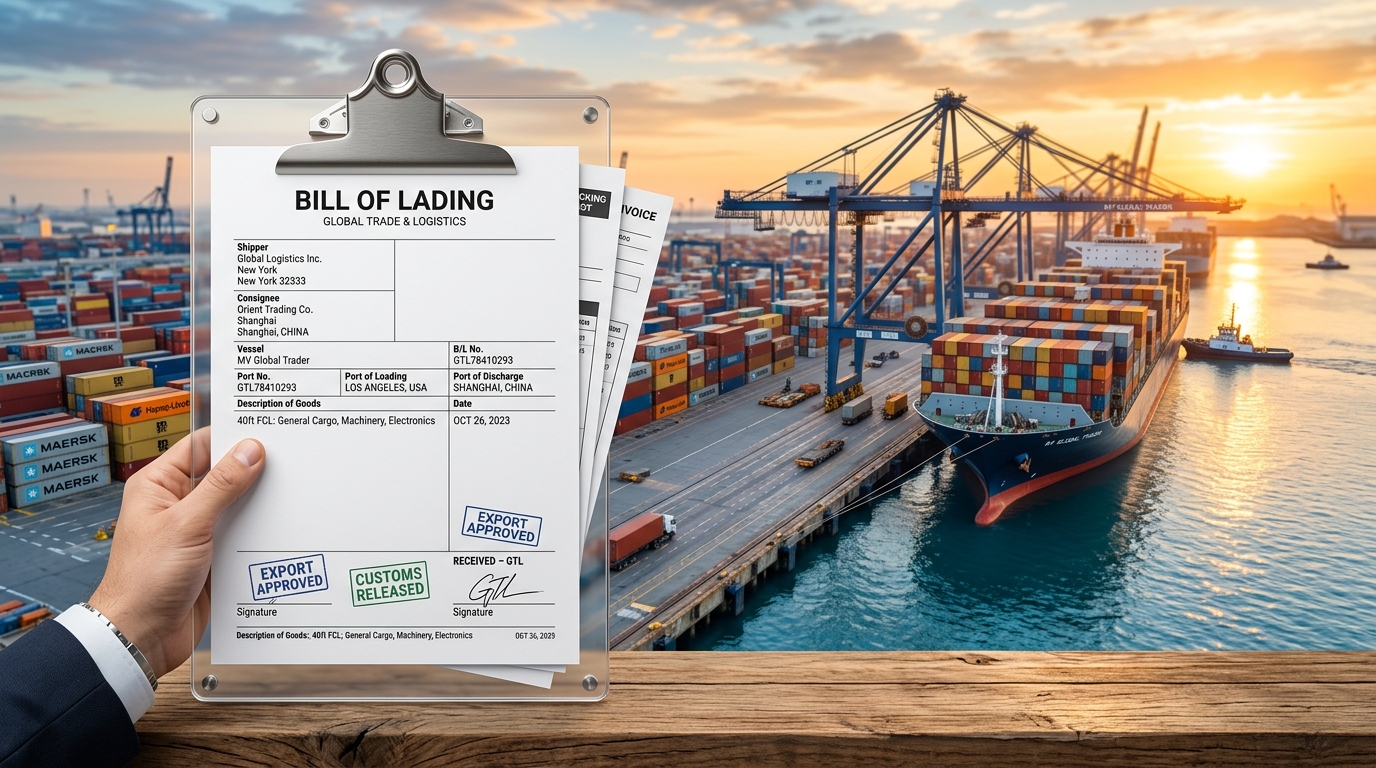
A bill of lading in exports is a legally binding transport document issued by a carrier to an exporter, serving as a receipt for cargo, a contract of carriage, and the title of ownership to the goods.
Why the bill of lading in exports exists
When you ship goods across the ocean, you surrender physical control of your cargo long before the buyer pays you. A bill of lading in exports exists to bridge this fundamental trust gap between buyers and sellers separated by thousands of miles. It proves definitively that the goods were loaded onto the vessel in good condition. It also dictates the exact terms under which the ocean carrier will transport them. Most importantly, it controls who has the legal right to claim the goods at the destination port. This makes the bill of lading in exports the single most important document in your international shipment. You can read more about international shipping basics on our guide to shipping documents.
Historically, the concept emerged hundreds of years ago when merchants needed a way to prove they owned cargo sitting in the hull of a ship halfway around the world. Today, it remains the backbone of global trade finance. Without it, banks would have no secure mechanism to release funds under a documentary credit, and buyers would have no guarantee that the cargo they are paying for actually exists and is in transit.
The three core functions of a shipping bill of lading
To understand its importance, you must understand that the document is performing three distinct jobs simultaneously. Each function protects a different party in the transaction.
First, it is a receipt for the goods. When the carrier or their agent signs the document, they are confirming that they have received the cargo exactly as described. If you deliver 1,000 cartons of electronics, the carrier acknowledges receipt of those 1,000 cartons. If the goods are damaged upon arrival, this receipt function is the baseline proof that they were handed over in good condition.
Second, it represents the contract of carriage. While the actual contract is often negotiated separately (such as a charter party agreement), the document itself contains the terms and conditions of transport on its reverse side. It outlines the carrier's liabilities, the limitations of that liability, and the specific obligations of both the shipper and the carrier during the voyage.
Third, and most critically for exporters, it acts as a document of title. Holding the original paper document gives you the right to claim the goods. You can transfer this ownership to another party (like the buyer or a bank) by endorsing the back of the document, much like signing a cheque. Until that endorsement happens and the document is physically handed over, the exporter retains control of the cargo.
What an export bill of lading looks like in practice
Imagine you are an exporter in Mumbai shipping a 40-foot container of textiles to a buyer in Felixstowe, UK. Once your cargo is loaded onto the MSC vessel at Nhava Sheva port, the shipping line issues an ocean bill of lading. This document is densely packed with crucial data points that must perfectly match your other export paperwork, particularly your commercial invoice and packing list.
The document will prominently list the 'Shipper', which is usually your company. The 'Consignee' field dictates who can claim the goods. If you are shipping under open account terms, this might be the buyer directly. However, if you are using a Letter of Credit, the consignee is often a bank, phrased as "To Order of [Bank Name]". The 'Notify Party' is the company that the carrier will contact when the vessel arrives—usually the buyer or their customs broker.
Below the entity details, you will find the vessel name, the voyage number, the port of loading, and the port of discharge. The body of the document contains a detailed description of the goods, such as "1,000 cartons of 100% cotton shirts," along with the container numbers and seal numbers. If you are using a Letter of Credit, you will present this exact bol meaning document to your bank. This proves the shipment occurred exactly as mandated and triggers your payment.
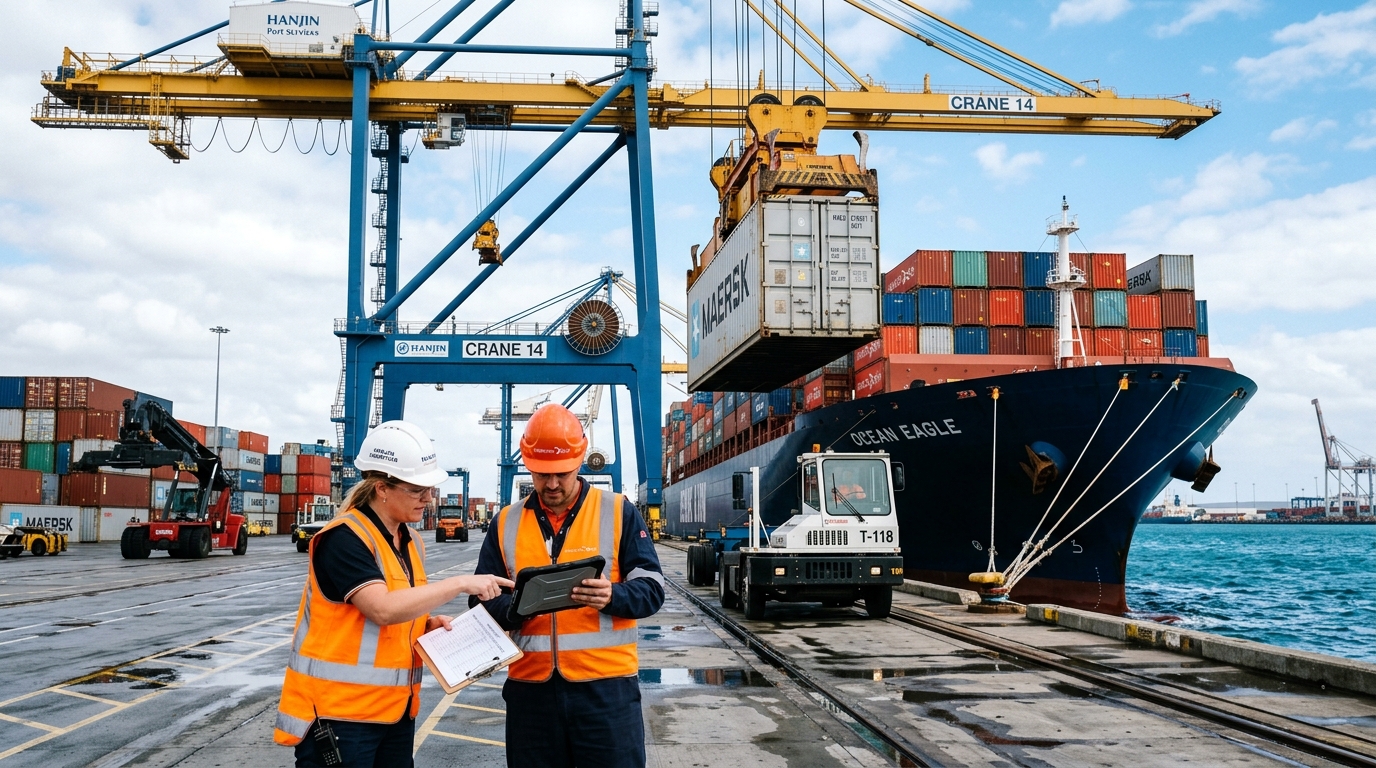
Paper originals vs. Surrendered (Telex Release) vs. Seaway Bills
Not all transport documents handle ownership in the same way. The specific type you choose depends entirely on your payment terms and the level of trust you have with the buyer.
Original Bills of Lading require the physical piece of paper to be mailed via courier to the destination. The buyer must present this physical paper to the shipping line to get their cargo. This is highly secure but slow. If a vessel transit takes 5 days but the courier takes 7 days, the cargo sits incurring demurrage charges while everyone waits for the paper to arrive.
A Telex Release (or Surrendered bill) solves this speed issue. The exporter surrenders the original paper document back to the shipping line at the port of origin. The shipping line then sends an electronic message (historically via telex, hence the name) to their destination office, authorizing the release of the cargo without the physical paper. You only do this after you have received full payment.
A Seaway Bill (or Express Bill) is different from the start. It is purely a receipt and a contract of carriage; it is explicitly not a document of title. When you use a Seaway Bill, the cargo is automatically released to the named consignee upon arrival. Exporters often mistakenly use Seaway Bills without realizing they have surrendered control of the cargo immediately. Only use this if you have been paid in advance or are shipping to your own subsidiary.
The edge cases that trap new exporters
Exporters often face unexpected issues with shipping documents. Knowing these edge cases can save you thousands of dollars. According to the International Chamber of Commerce, document discrepancies are the leading cause of delayed payments in global trade.
- Losing the original paper document: If you issue original paper documents and they are lost by the courier, the situation becomes a logistical nightmare. The shipping line will require a bank guarantee—often for 200% of the cargo value, held for up to three years—before they will release the goods to the buyer without the original paper.
- Clean vs. Claused Status: When the carrier receives the goods, they inspect the external packaging. If they note damage (e.g., "three pallets water damaged"), they write this on the document, making it "claused" or "foul." Banks will unilaterally reject a claused document under a Letter of Credit. This means you won't get paid until the dispute with the buyer is resolved. You can learn how to avoid this in our common export mistakes article.
- Misaligned Consignee details: If the commercial invoice says "Acme Corp Ltd" but the transport document says "Acme Corporation", a strict bank examiner will flag it as a discrepancy. Every character must match exactly.
- Late presentation: Letters of Credit typically require the documents to be presented to the bank within 21 days of shipment. If the courier is delayed or your internal team is slow, presenting on day 22 voids the credit guarantee.
Electronic Bills of Lading (eBL): The modern standard
The industry is rapidly shifting away from physical paper toward Electronic Bills of Lading (eBL). Unlike a PDF scan of a paper document (which has no legal standing as a title document), a true eBL is built on blockchain or secure centralized registries.
An eBL carries the exact same legal weight as a paper document but can be transferred instantly across the globe. This eliminates the risk of courier loss, removes the wait times that cause demurrage at the destination port, and drastically reduces the potential for document fraud. Major shipping lines like MSC, Maersk, and Hapag-Lloyd have committed to fully digitizing these documents by 2030. For high-volume exporters, transitioning to eBLs is no longer an optional upgrade; it is a baseline requirement for maintaining supply chain velocity.
Frequently asked questions
What is the difference between a master and house bill of lading?
A Master document is issued by the main vessel operator (like Maersk or CMA CGM) directly to a freight forwarder. A House document is then issued by that freight forwarder to the actual exporter. Both serve the same legal functions, but they represent different links in the chain of liability for a bill of lading in exports.
Can an ocean bill of lading be electronic?
Yes. Electronic versions (eBLs) are becoming the global standard for a bill of lading in exports. They carry the exact same legal weight as paper but are transferred instantly via secure platforms, completely eliminating courier delays and the risk of lost documents.
How does a shipping bill of lading affect payment?
Under a letter of credit, the bank requires a "clean on board" shipping bill of lading to release funds. A clean bill of lading in exports proves the goods shipped on time and without damage. Without it, your payment is delayed indefinitely until the discrepancy is resolved.
What happens if the consignee is 'To Order'?
When the document is made out "To Order" (often to the order of a bank or the shipper), it means the document is negotiable. The named party must physically endorse the back of the bill of lading in exports to transfer ownership to the final buyer.
Who is responsible for paying freight charges?
This depends on the Incoterms. If the document is marked "Freight Prepaid," the exporter pays the carrier. If it is marked "Freight Collect," the buyer must pay the shipping line before the cargo is released at the destination port.